Puck Prep for Even Extraction
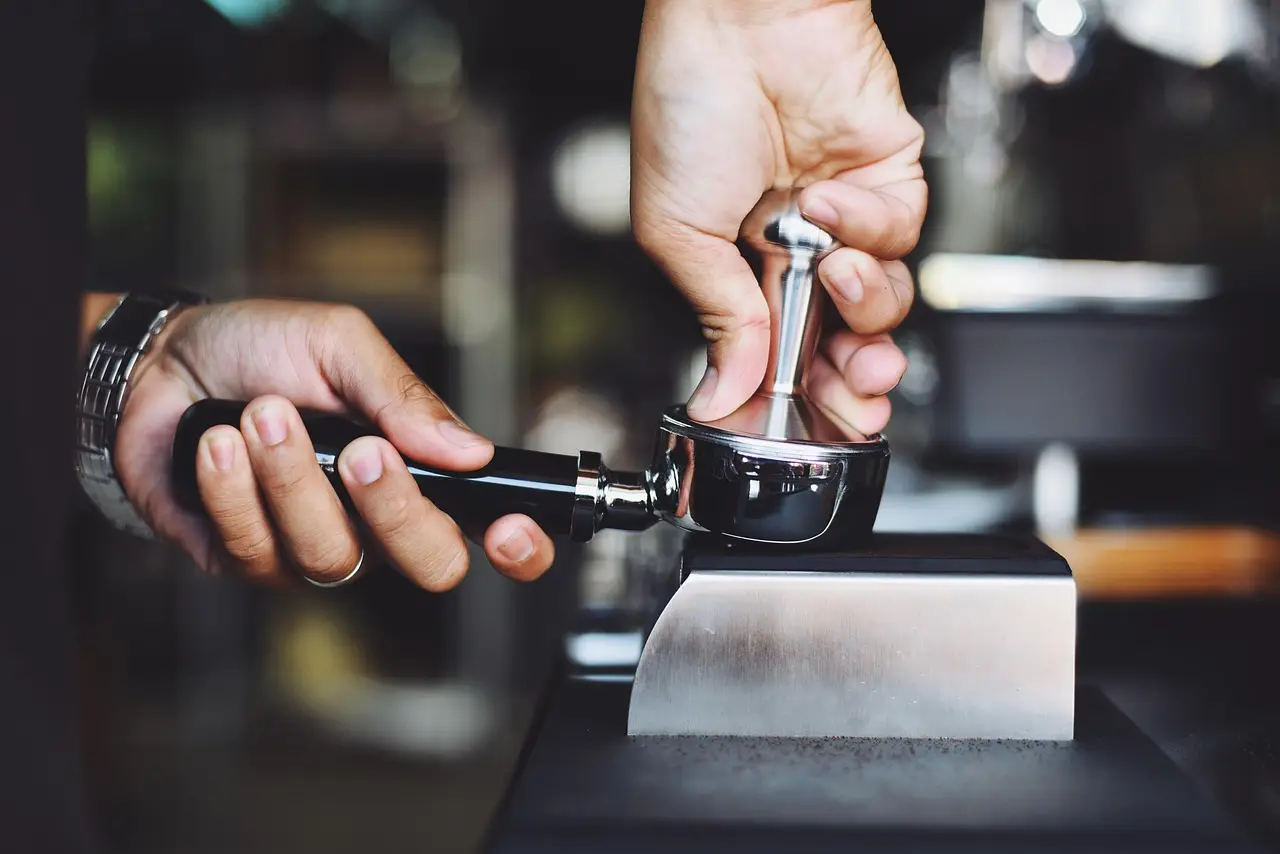
The goal of puck prep is simple: make the coffee bed the same thickness and density from edge to edge, so water has no easy path. Do it the same way every time and your shots get easier to read.
Here's why it matters. When a puck has weaker spots, water speeds through them and the rest of the coffee gets less. Breville calls that channeling.1 Good prep removes those spots.
Know the parts
The coffee sits in a filter basket, which is part of the portafilter, the handled piece that locks into the machine.2 The packed coffee inside the basket is the puck.
The routine
- Start with a clean basket. Breville suggests regularly cleaning the dispersion screen, the inside of the portafilter and the undersides of the filter basket.3
- Grind right before brewing. Breville says to always grind your coffee right before brewing espresso.1
- Weigh the dose. Use the same amount each time so any change you see comes from the one thing you adjusted.3
- Spread the grounds evenly. Breville says to make sure the grounds are spread evenly in the portafilter, using a distribution tool.1
- Tamp straight down. Keep the tamper level, with no tilt.1 Wikipedia says tamping the coffee down promotes even water penetration.4
- Don't tap the portafilter afterward. Breville lists this among its channeling fixes.1
- Lock in and start the shot. Follow your manual for fitting the portafilter to your machine.
What "dense and even" means
Breville says dense, evenly packed grounds are essential to creating the pressure to extract espresso.3
Even means level. Check that the surface looks flat before you tamp, and that the tamper sits flat on it. A tilted tamp leaves one side thinner than the other, and the water will find it. Breville's channeling advice is to tamp without any tilting.1
Tamp pressure
Wikipedia notes that the amount of pressure used to tamp can adjust the taste of the espresso.2 That makes tamp pressure one more setting to track.
So choose a firm, repeatable press and stick with it. If you vary it, you're changing a second setting while you try to learn about the first. Breville says to change one variable at a time.3
Signs your prep needs work
Look for several thin streams from the portafilter, or a cup that tastes different each time with the same recipe. Breville links channeling to multiple thin streams and inconsistent taste.1 For a full picture of what channeling looks like, read channeling explained.
Where prep fits
Prep comes before grind changes. If the bed isn't even, moving the grind chases a moving target. Sort out your routine first, then move on to adjusting the grind a step at a time. If the flow still seems off after that, check the gusher and crawler guide.
Sources used
- Espresso machine problems and fixes, Breville
- Espresso machine, Wikipedia
- How to dial in espresso: The beginner's guide, Breville
- Espresso, Wikipedia
Keep troubleshooting
 Dialing In Espresso One Change at a TimeWhere to start when your espresso tastes off, which setting to change first, and why changing only one thing per shot gets you there faster.
 Why Your Espresso Tastes SourA sour, sharp shot usually means the water didn't pull enough from the coffee. Here's how to read it and which setting to change first.
 Why Your Espresso Tastes BitterA harsh, dry or burnt-tasting shot usually points to over-extraction. Learn what causes it and the order to try fixes in, one change at a time.